
RAG explained without code

It’s 9:40 pm and you’re planning a long weekend. You ask the HR chatbot how many leaves you have left. “You have 12 leaves remaining,” it says, with total confidence.
Next morning, HR says 4.
The bot wasn’t lying. It answered from last year’s leave policy, the one it happened to find first. That one wrong document is what RAG is really about.
On this page
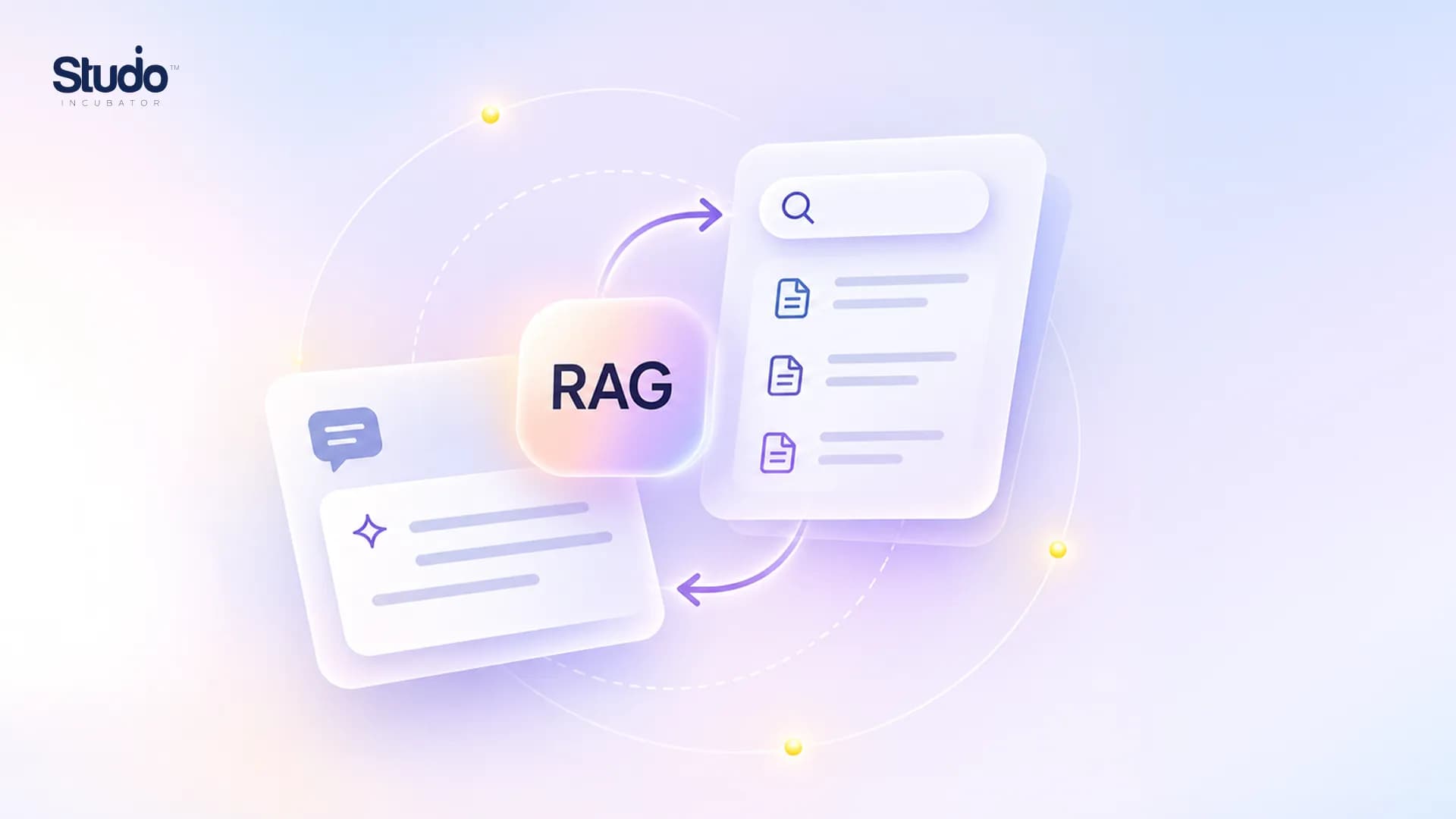
RAG (retrieval-augmented generation) means the AI looks things up before it answers. It finds the most relevant passages in your own documents, then writes its answer from them, ideally showing where each fact came from. Think of it as an open-book exam for AI.
What is RAG, in plain words?
It’s how an AI answers from your information instead of from memory. Ask that HR bot about leave, and a RAG system first searches the HR documents, picks the passages that seem to match, and only then writes a reply.
Without that step, the AI answers from whatever it learnt in training, which knows nothing about your company’s leave policy at all.
Why do AI products look things up before they answer?
Because it makes answers current, specific and checkable. It also gives the AI an honest way out: “I couldn’t find that in the policy”, instead of a made-up number.
| Aspect | Without RAG | With RAG |
|---|---|---|
| Knows | Only what it was trained on | Your documents too |
| Up to date | Frozen at training time | As current as your files |
| Shows sources | No | Can point to the passage |
| When unsure | May guess | Can say nothing was found |
How can you tell when it looked up the wrong thing?
Look at what it read, not just what it said. Our 12-leaves bot sounded perfect. The problem was the document behind the answer: last year’s policy sitting right next to this year’s.
The usual giveaways: the source it quotes doesn’t actually say that, the answer mixes two versions, or it’s very sure about something the documents never mention.
What should designers and product managers decide about RAG?
The decisions that matter most aren’t code. Which documents may the bot read, and which never? Does it show its source? What does it say when nothing matches? Who removes last year’s policy?
Get those right and the 12-leaves surprise never happens. If you’d like to build an assistant like this on real documents, see how our studio programme does it. And when you’re ready, read how to test an AI feature before users do.
Questions about building ai
Retrieval-augmented generation. The AI retrieves relevant information first, then generates its answer from it.
No. RAG looks your documents up at the moment of each question. Training changes the model itself and is slower and costlier to update.
Usually because they found the wrong passage, an outdated version, or nothing relevant, and answered anyway. Checking what it retrieved finds most of these.
Not to start. No-code tools can connect an AI to a folder of documents, and the key decisions about sources and behaviour are design decisions.
Company help desks, HR and policy assistants, product documentation search, and any assistant that must answer from an organisation’s own information.
Studio Incubator in Shivajinagar teaches RAG on real data in its 12-week AI Product Design and Agentic AI programme. Cohort 1 starts on 4 January 2027.
More answers on the FAQs page and the fees and scholarships page.
Jitendra Bhavsar (JB)
Co-faculty, AI build
JB leads technical delivery and AI automation at Qquench and teaches the build side of the programme.