
Design Thinking Course: A User-Centered Approach to Innovation

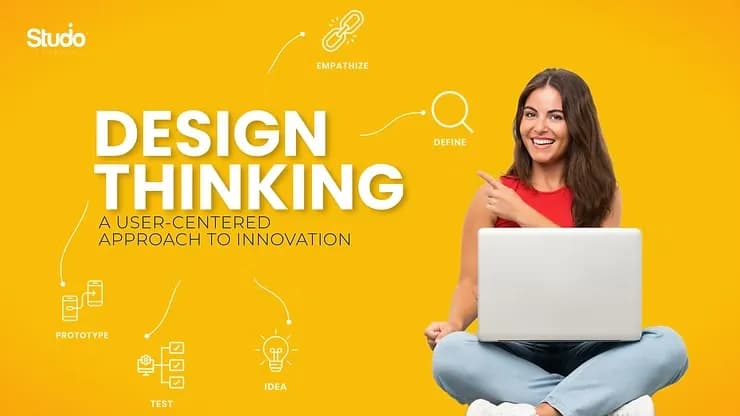
Design thinking has become a buzzword in various industries, from tech startups to large corporations, as it offers a structured yet creative approach to solving complex problems. By focusing on the end user, design thinking promotes empathy, innovation, and practical solutions. In this blog, we’ll explore what design thinking is, its core principles, and how it can be applied to drive innovation in your projects.
Our UI UX Design + Graphic Design course focuses on the Design Thinking process, providing an in-depth exploration of every stage. At Studio Incubator, we guide students through understanding user needs, ideation, prototyping, and testing, ensuring they develop a strong foundation in both creative and analytical aspects of design. This holistic approach empowers students to craft user-centered designs that are both visually compelling and functionally effective.
On this page
- 1. What is Design Thinking
- 2. The Five Phases of Design Thinking
- 3. Empathize
- 4. Define
- 5. Ideate
- 6. Prototype
- 7. Test
- 8. Core Principles of Design Thinking
- 9. User-Centricity
- 10. Collaboration
- 11. Iteration
- 12. Experimentation
- 13. Applying Design Thinking in Your Projects
- 14. Start with Empathy
- 15. Define the Problem
- 16. Encourage Creativity
- 17. Build Prototypes
- 18. Test and Iterate
What is Design Thinking
Design thinking is a problem-solving methodology that prioritizes the needs and experiences of users. It involves understanding the user, challenging assumptions, and redefining problems to identify alternative strategies and solutions. Unlike traditional problem-solving approaches, design thinking is iterative, flexible, and non-linear, allowing for continuous refinement and improvement.
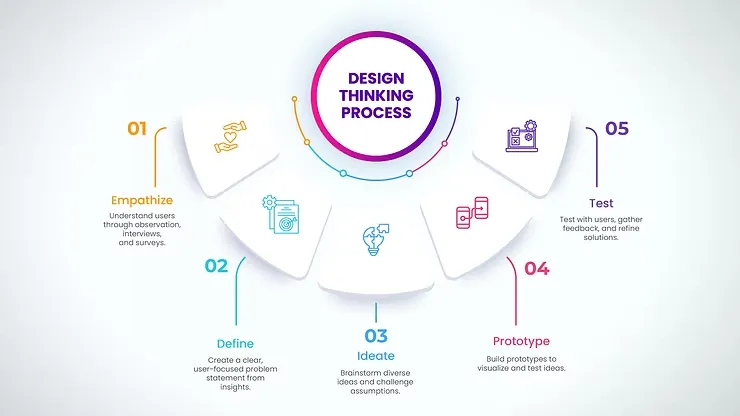
The Five Phases of Design Thinking
Empathize
The first phase of design thinking is to understand the people you are designing for. This involves immersing yourself in their environment, observing their behavior, and engaging with them through interviews and surveys. The goal is to gain deep insights into their needs, experiences, and pain points.
Define
In the define phase, you synthesize the insights gathered during the empathize phase to create a clear problem statement. This involves identifying key issues and articulating them in a way that is user-centered. A well-defined problem statement helps guide the design process and ensures that the solutions developed are relevant and impactful.
Ideate
The ideate phase is where creativity and innovation come into play. This is the stage where you generate a wide range of ideas and potential solutions. Techniques such as brainstorming, mind mapping, and sketching can be used to explore different possibilities. The goal is to think outside the box and challenge conventional assumptions.
Prototype
In the prototype phase, you turn your ideas into tangible forms. Prototypes can range from simple sketches and paper models to more sophisticated digital mockups and interactive simulations. The purpose of prototyping is to visualize your ideas and test their feasibility. It allows you to explore different solutions and gather feedback early in the process.
Test
The final phase of design thinking is testing the prototypes with real users. This involves observing how users interact with the prototypes, gathering their feedback, and identifying areas for improvement. The testing phase is iterative, meaning that based on the feedback, you may need to refine your prototypes and test them again. This continuous loop of testing and refining ensures that the final solution is well-suited to the users’ needs.
Design Thinking Course 1
Core Principles of Design Thinking
User-Centricity
At the heart of design thinking is a deep empathy for the end user. By focusing on the user’s needs and experiences, design thinking ensures that solutions are relevant, meaningful, and impactful.
Collaboration
Design thinking encourages collaboration across different disciplines and perspectives. By bringing together diverse teams, you can leverage a wider range of skills, experiences, and ideas to create more innovative solutions.
Iteration
Design thinking is an iterative process that involves continuous refinement and improvement. By testing and prototyping early and often, you can identify and address issues before they become significant problems.
Experimentation
Our Design thinking course promotes a mindset of experimentation and learning. By embracing failure as a valuable part of the process, you can take risks, explore new ideas, and discover unexpected solutions.

Design Thinking Course
Applying Design Thinking in Your Projects
Start with Empathy
Begin by engaging with your users and understanding their needs, experiences, and challenges. Use techniques such as interviews, surveys, and observational studies to gather deep insights.
Define the Problem
Synthesize your insights to create a clear, user-centered problem statement. Focus on identifying key issues and articulating them in a way that guides the design process.
Encourage Creativity
Facilitate brainstorming sessions and other creative techniques to generate a wide range of ideas. Encourage team members to think outside the box and challenge conventional assumptions.
Build Prototypes
Turn your ideas into tangible prototypes that can be tested and refined. Use low-fidelity prototypes to explore different solutions and gather feedback early in the process.
Test and Iterate
Test your prototypes with real users, gather feedback, and identify areas for improvement. Iterate on your designs based on the feedback to ensure that the final solution is well-suited to the users’ needs.
Design thinking offers a powerful approach to innovation by prioritizing the needs and experiences of users. By following its iterative, user-centered methodology, you can create more meaningful and impactful solutions. Whether you are designing a new product, improving a service, or solving a complex problem, design thinking can help you navigate uncertainty and drive innovation.
Explore our UI UX Design + Graphic Design course and take the first step towards becoming a UI/UX design expert. Start your journey to creating intuitive and engaging user experiences that captivate and inspire.
Juily Gite
Founder, Studio Incubator
Juily has spent 25+ years in design and enterprise learning, and once led creative teams of up to 1,500 designers. She runs the studio and teaches the AI Product Design and Agentic AI programme in person in Pune.